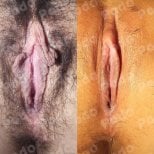
| República da Coreia | Turki | Amerika Serikat | |
| Labiaplasti tanpa bekas luka | dari $2,500 | dari $3,000 | dari $5,500 |
Bookimed tidak menambah biaya tambahan dalam harga Labiaplasti tanpa bekas luka. Tarif berasal dari daftar harga resmi klinik. Anda membayar langsung di klinik untuk Labiaplasti tanpa bekas luka Anda saat tiba.
Bookimed berkomitmen pada keselamatan Anda. Kami hanya bekerja dengan institusi medis yang menjaga standar internasional tinggi dalam Labiaplasti tanpa bekas luka dan memiliki izin yang dibutuhkan untuk melayani pasien internasional di seluruh dunia.
Bookimed menawarkan bantuan ahli gratis. Koordinator medis pribadi mendukung Anda sebelum, selama, dan setelah perawatan, menyelesaikan semua masalah Anda. Anda tidak pernah sendirian dalam perjalanan Labiaplasti tanpa bekas luka Anda.
Di Korea, labiaplasty tanpa jahitan menggunakan laser CO2 atau Vbeam berpresisi tinggi dan diseksi frekuensi radio sebagai pengganti pisau bedah tradisional. Teknologi canggih ini memastikan hemostasis segera, meminimalkan trauma jaringan dan pembengkakan. Presisi bedah ini memungkinkan sayatan mikroskopis yang hampir tidak terlihat dalam waktu 6-12 bulan.
Pendapat ahli Bookimed: data dari 76 klinik Korea menunjukkan tren yang jelas menuju penggunaan alat medis dalam pembedahan. Sementara biaya labiaplasty dasar berkisar antara 937 hingga 937, versi tanpa jahitan dimulai dari 1275. Biaya tambahan ini mencakup teknologi khusus seperti diseksi frekuensi radio. Metode ini menghasilkan sayatan yang lebih halus daripada pisau bedah logam standar.
Umpan balik pasien: Keberhasilan bergantung pada kepatuhan ketat terhadap aturan 8 minggu untuk menghindari aktivitas seksual dan mengontrol kelembapan. Sebagian besar pasien melaporkan bahwa bercak merah muda awal akan hilang sepenuhnya dalam waktu 6 bulan.
Tidak ada labiaplasty non-bedah sejati yang memberikan pengurangan jaringan permanen. Meskipun perawatan frekuensi radio seperti Aviva atau laser lokal memberikan pengencangan lembut melalui lubang mikroskopis, perawatan tersebut tidak dapat menghilangkan kelebihan kulit. Hanya eksisi bedah, yang sering dilakukan dengan instrumen berpresisi tinggi di Seoul, yang menjamin pembentukan ulang dan pengurangan permanen.
Pendapat para ahli Bookimed: Data dari pusat-pusat khusus seperti Rumah Sakit Wanita Yonsei Sarangmoa menunjukkan pergeseran ke arah presisi robotik. Meskipun banyak pasien mencari perangkat energi non-bedah, teknologi ini paling cocok untuk memberikan kenyamanan fungsional. Bagi mereka yang menginginkan pengurangan volume, 4.500 pasien yang dirawat setiap tahun di pusat-pusat besar di Seoul sebagian besar memilih intervensi bedah.
Umpan balik pasien: Pasien melaporkan bahwa meskipun filler non-bedah atau laser memberikan efek pengangkatan sementara, seringkali hasilnya mengecewakan terkait ukuran yang didapatkan. Eksisi bedah tetap menjadi satu-satunya cara untuk mencapai hasil permanen dan simetris tanpa biaya perawatan berkelanjutan.
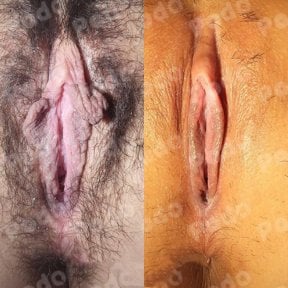
Pemulihan dari labiaplasty tanpa sambungan di Korea Selatan biasanya memungkinkan pasien untuk kembali bekerja dalam waktu 7 hari. Sebagian besar pasien dapat langsung berjalan ringan setelah prosedur radiofrekuensi atau laser modern. Pemulihan fungsional penuh dan dimulainya kembali aktivitas seksual biasanya membutuhkan waktu 4 hingga 6 minggu.
Para ahli Bookimed mengatakan: Klinik seperti Rumah Sakit Wanita Yonseisarangmoa menggunakan sistem bedah da Vinci untuk memastikan presisi tertinggi. Data menunjukkan bahwa pusat-pusat di Korea Selatan sering menyediakan perlengkapan salep khusus untuk perawatan pasca operasi. Protokol pemulihan khusus ini dapat secara efektif mengurangi pembengkakan yang terlihat hingga setengahnya dibandingkan dengan perawatan standar.
Umpan balik pasien: Pasien menekankan pentingnya mengoleskan es secara teratur selama 72 jam pertama. Banyak yang menyarankan untuk menghindari hubungan seksual setelah 4 minggu untuk menghindari iritasi yang disebabkan oleh gesekan selama fase penyembuhan akhir.
Korea Selatan adalah pemimpin dunia dalam labiaplasty tanpa bekas luka berkat keahlian bedah khusus dan teknologi minimal invasif yang canggih. Para ahli bedah di Seoul menggunakan teknik frekuensi radio dan laser untuk menghilangkan garis sayatan yang terlihat. Metode ini memastikan presisi tinggi, hasil alami, dan masa pemulihan yang jauh lebih singkat.
Pendapat ahli Bookimed: Meskipun banyak negara menawarkan labiaplasty total, klinik-klinik Korea Selatan seperti Yonseisarangmoa menangani lebih dari 4.500 pasien setiap tahunnya. Volume prosedur yang tinggi ini memungkinkan para ahli bedah untuk menyempurnakan teknik penjahitan internal, yang jarang digunakan di tempat lain. Tingkat operasi revisi yang tinggi inilah yang memungkinkan mereka untuk secara andal mencapai hasil yang sempurna, tidak seperti metode tradisional.
Pendapat pasien: Pasien sangat menghargai keandalan estetika yang diberikan oleh penjahitan internal, tetapi menekankan pentingnya ketersediaan dokter kandungan setempat. Sebagian besar setuju bahwa periode pemulihan 4 hingga 8 minggu membutuhkan perencanaan perawatan di rumah pascaoperasi yang cermat.
In the Republic of Korea, scarless labiaplasty is a minimally invasive vaginal rejuvenation. It uses high-precision lasers or heat-based technology. These methods in Seoul clinics target excess labia minora tissue. They correct asymmetry or discomfort while minimising visible scarring and preserving sexual sensation.
Bookimed Expert Insight: These laser methods are marketed as scarless. However, they often provide a subtler reduction than traditional surgery. Many patients choose these heat-based options specifically for the 12–18 month result. They do so before committing to permanent surgical excision. Seoul clinics maintain high standards, with specialised centres serving 4,500+ patients annually.
Patient Consensus: Patients in Korea felt relieved that sensation remained intact alongside improved aesthetic symmetry. They suggest following strict recovery rules regarding spicy food and alcohol for the best healing results.
Scarless labiaplasty in the Republic of Korea focuses on laser-assisted tissue reduction and microsurgical suturing. These techniques aim to eliminate visible marks. Surgeons use high-precision lasers to contour tissue while minimising trauma. Key methods include laser fusion, where heat seals incisions. Hidden-incision techniques place stitches within natural folds.
Bookimed Expert Insight: Many Seoul clinics market scarless results. However, the most effective outcomes often come from hybrid approaches. Leading centres like Yonseisarangmoa Women Disease Hospital combine laser precision with specialised microsurgery. This technique preserves nerve sensitivity. It also achieves the aesthetic goals patients expect from high-tech Korean gynaecology.
Patient Consensus: Patients in Seoul report that laser methods significantly reduce worries about visible stitches. They also reduce concerns about post-surgical recovery. Most experienced no loss of sensation. They appreciated how surgeons customised wedge or trim techniques to match their specific anatomy.
Recovery after scarless labiaplasty in the Republic of Korea is typically quick. Patients can return to daily activities within 2–3 days. Clinics in Seoul use high-precision lasers to fuse tissue. This reduces swelling and eliminates traditional sutures. Full healing generally takes 4–6 weeks.
Bookimed Expert Insight: While lasers allow for a scarless finish, the internal tissue still needs time to bond. Clinical data support this. Centres like Yonseisarangmoa women disease hospital show laser groups report 30% less bruising. Most surgeons advise staying in Seoul for 7 days to complete the first review.
Patient Consensus: Expect the first 3 days to be the most tender before noticing marked improvement. Plan for a full week off work and wait at least a month before resuming intense exercise. Don't judge the final look too early as swelling takes weeks to disappear completely.
Scarless labiaplasty in the Republic of Korea uses high-precision CO2 or Erbium lasers. These lasers refine tissue without traditional scalpels. This sutureless technique prevents visible scarring and stitch marks. Leading Seoul facilities like Yonseisarangmoa Women Disease Hospital use technologies. This approach delivers natural results and rapid healing.
Bookimed Expert Insight: While many markets focus on basic excision, Korean clinics frequently integrate robotic assistance. Yonseisarangmoa Women Disease Hospital is a noted leader in robotic-assisted feminine health. This precision often allows for more complex "3D" anatomical reshaping than standard manual techniques.
Patient Consensus: Patients in Korea report immense satisfaction with the natural aesthetic and lack of stitch marks. They suggest staying in Seoul long enough for initial follow-up checks before flying.
Korean clinics stay preferred for scarless labiaplasty. Surgeons specialise in laser-based techniques that eliminate traditional incisions. These methods use precision lasers to seal blood vessels instantly. This reduces swelling and prevents visible scarring while preserving full nerve sensitivity and natural function.
Bookimed Expert Insight: South Korea holds a high global rank for cosmetic gynaecology with around 80 specialised clinics. Yonseisarangmoa Women Disease Hospital handles 4,500 patients annually. This massive volume allows surgeons to refine "hidden-incision" methods that are rarely performed elsewhere.
Patient Consensus: Patients in the Republic of Korea value subtle results and natural appearance. They report no nerve damage or loss of pleasure after laser procedures. Many find the no-suture options reduce recovery stress significantly.
Choose a clinic by prioritising specialised gynaecology hospitals over general plastic surgery centres. Focus on facilities using laser-assisted techniques or deepithelialisation to hide incision lines. Verify surgeons are members of the Korean Society of Plastic Surgery or specialised obstetric societies in Seoul.
Bookimed Expert Insight: South Korean clinics often integrate robotic technology into gynaecological care for higher precision. Yonseisarangmoa Women Disease Hospital uses the Da Vinci robot for complex cases. This high-tech focus usually indicates a clinic invests in superior surgical accuracy and safety.
Patient Consensus: Patients in the Republic of Korea suggest prioritising clear technical explanations over low prices. They recommend confirming that the clinic provides a detailed one-month recovery plan focused on nerve safety.